Function :
In traditional lighting control mode, the mechanical switch is usually used to directly control the on and off of the lighting power supply to realize the
switch of the lamps. The lamps and manual switches are scattered and can not be conveniently and effectively managed. At the same time, there is also
a low efficient energy use, security and other shortcomings.
Automatic Lighting Control through direct digital control technology to achieve lighting switch, brightness regulation. Because the automatic control
adopts the "point-to-point" connection mode, the number of the decision-making control part is consistent with the number of lamps and lanterns, which
not only increases the cost, but also brings difficulties ofr the installation.
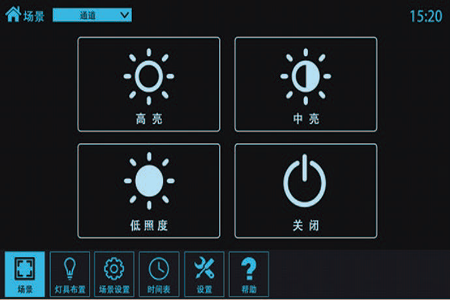
Intelligent lighting control mode, based on field bus technology, and further combined with Ethernet technology to achieve remote, large-scale
lighting control, so that the scale of the lighting system is not limited; The crew can study, work and live in a comfortable lighting atmosphere to achieve the
characteristics of energy-saving, comfort and humanization by setting various lighting scenes and automatically adjusting the brightness according to the
time or the illumination inside and outside the cabin, take into account the advantages of flexible control mode, convenient management mode and
simple wiring mode.
The intelligent lighting control system is to optimize the comfort index of different characteristic cabin lighting, to create a comfortable environment,
and to improve the work efficiency and quality of life of the crew. The lighting function of different scene can be realized by analyzing the requirement of
illumination, color temperature and other parameters.
Features :
Meet the requirements of GJB environment and electromagnetic compatibility; meet the requirements of Dali IEC62386 International Standard
Reduce cable laying, reduce the cost of shipbuilding.
Save Energy and reduce consumption, improve lighting effect, extend the life of light source
Based on the general, modular design, easy to centralized control, unified management
User-defined situation mode, time adaptive mode, memory retention of the state of power loss and other humanized design
Lighting design to meet the needs of human physiological rhythm